Chashan Base Update: Production Rhythm for Appliance Bowl Programs
Send your drawing for DFM review
Even a rough print, target volume, and finish requirement are enough for a go/no-go and next-step reply within one business day.
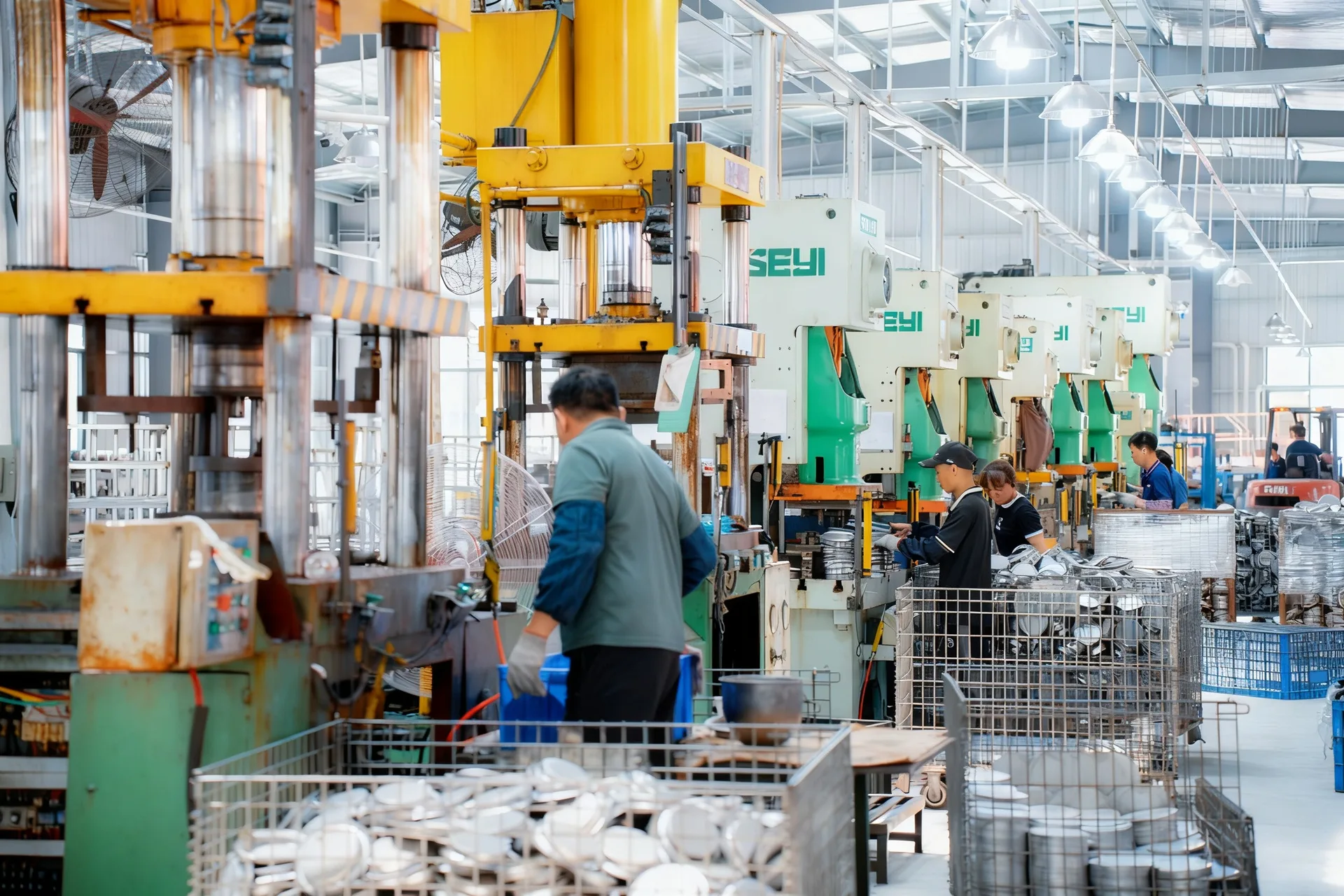
Our Chashan base is where most stainless appliance bowl programs run day to day — deep drawing, secondary forming, laser welding where specified, and polishing before packing. This note explains how we keep production rhythm stable when buyer forecasts move, without promising inventory that does not exist.
What “capacity” means in practice
Buyers often ask for a single monthly number. For OEM hardware, useful capacity is lane time plus tooling readiness, not a catalog SKU count. At Luzhenyu we track press hours, polish-line hours, and mold availability under project agreements. Stand mixer bowls remain the majority of current volume, so mixer-related changeovers and hub-interface fixtures dominate weekly planning.
When a new geometry needs tooling, we separate that work from mass lanes so pilot parts do not steal time from locked recurring POs. Existing-tooling customization (grade, finish, logo, packing) can usually share a faster path than brand-new draw dies.
Forecast tiers beat single-PO spikes
Programs that share a quarterly forecast tier are easier to sequence: coil allocation, fixture PM, and OQC staffing follow the tier instead of reacting to last-minute spikes. When a forecast dips below a sensible run size, we prefer consolidating into fewer larger batches rather than many partial setups that increase weld-fixture or polish variance.
If your channel needs seasonal peaks, tell engineering the peak weeks and the minimum continuous run you can accept. That input shapes whether we hold a reserved polish window or keep the program in the shared queue.
How changeovers are gated
Changeovers are gated by FAI status and open CAPA items, not only by press free time. A line that looks “empty” may still be blocked until first-article limits are re-confirmed after mold maintenance. Export programs also need documentation packing (mill certs, OQC summaries) ready before master cartons leave — that clerical step is part of the schedule, not an afterthought.
What to send if you are planning Q+1 volume
Share updated annual or quarterly tiers, any finish or packing change, and whether weld or hub gauges stay the same. If you are evaluating a second-source path, note which platforms already have approved fixtures. For a structured program overview, see OEM programs; for forming limits, review deep drawing.
Request a production-routing discussion with your forecast table attached — we reply with feasibility and a quotation path, not a stock list.
Send your drawing for DFM review
Even a rough print, target volume, and finish requirement are enough for a go/no-go and next-step reply within one business day.
Typical first response within 1 business day (WhatsApp often faster for Asia/EU time zones).
Explore more