
Custom Formed Stainless Tray / Drip Pan
A drawing-based tray reference for projects that need controlled depth, formed corners, flatness, and clean edge treatment.
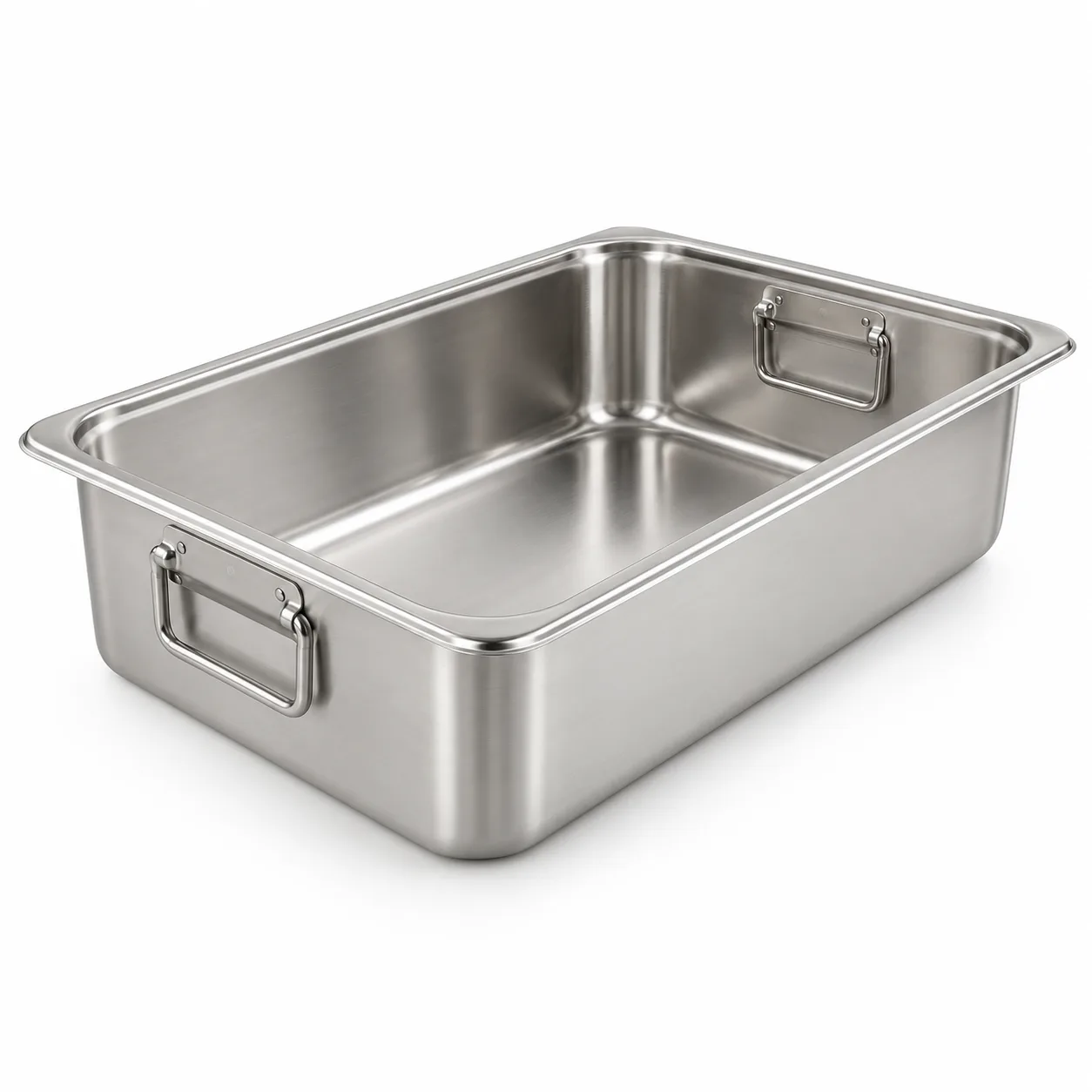
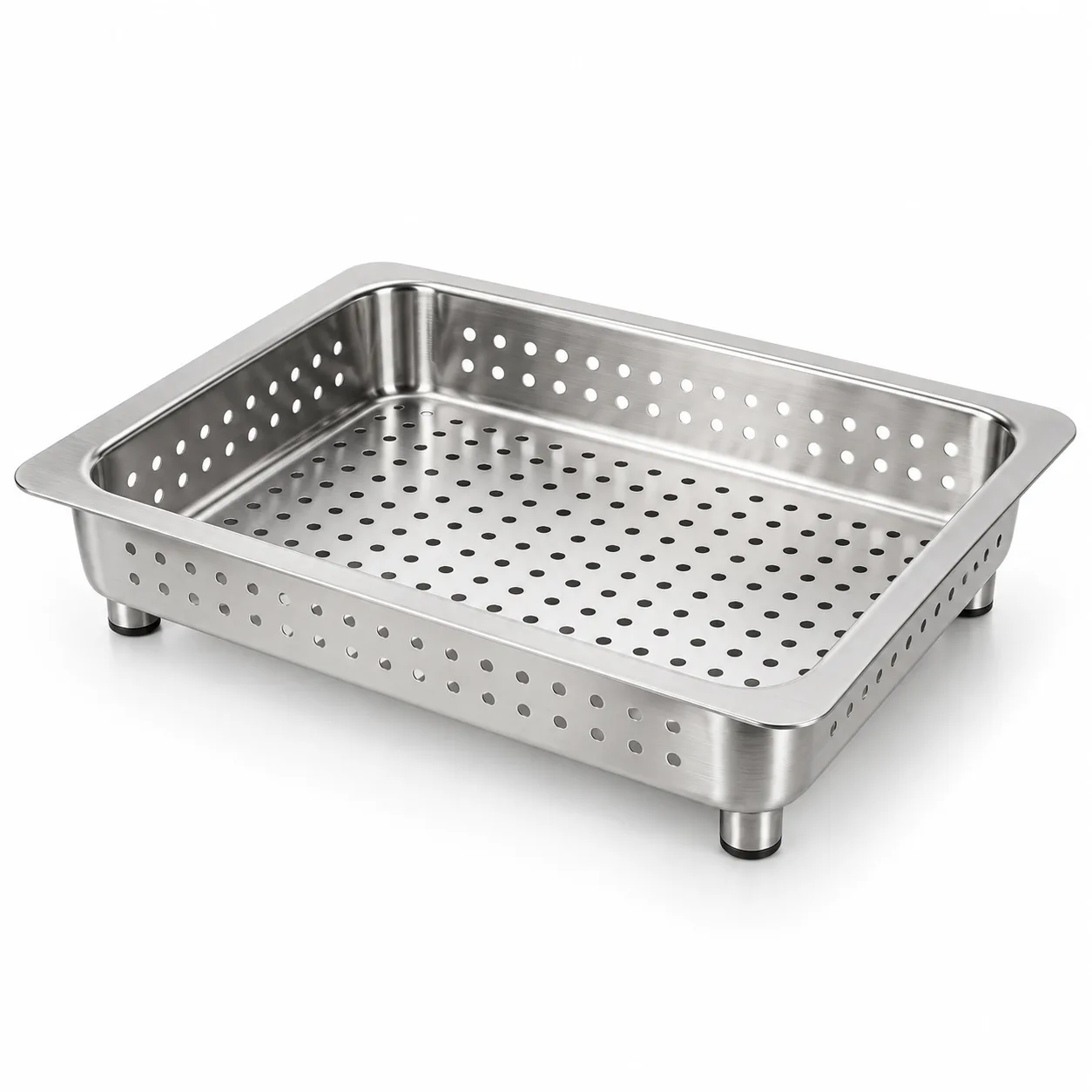
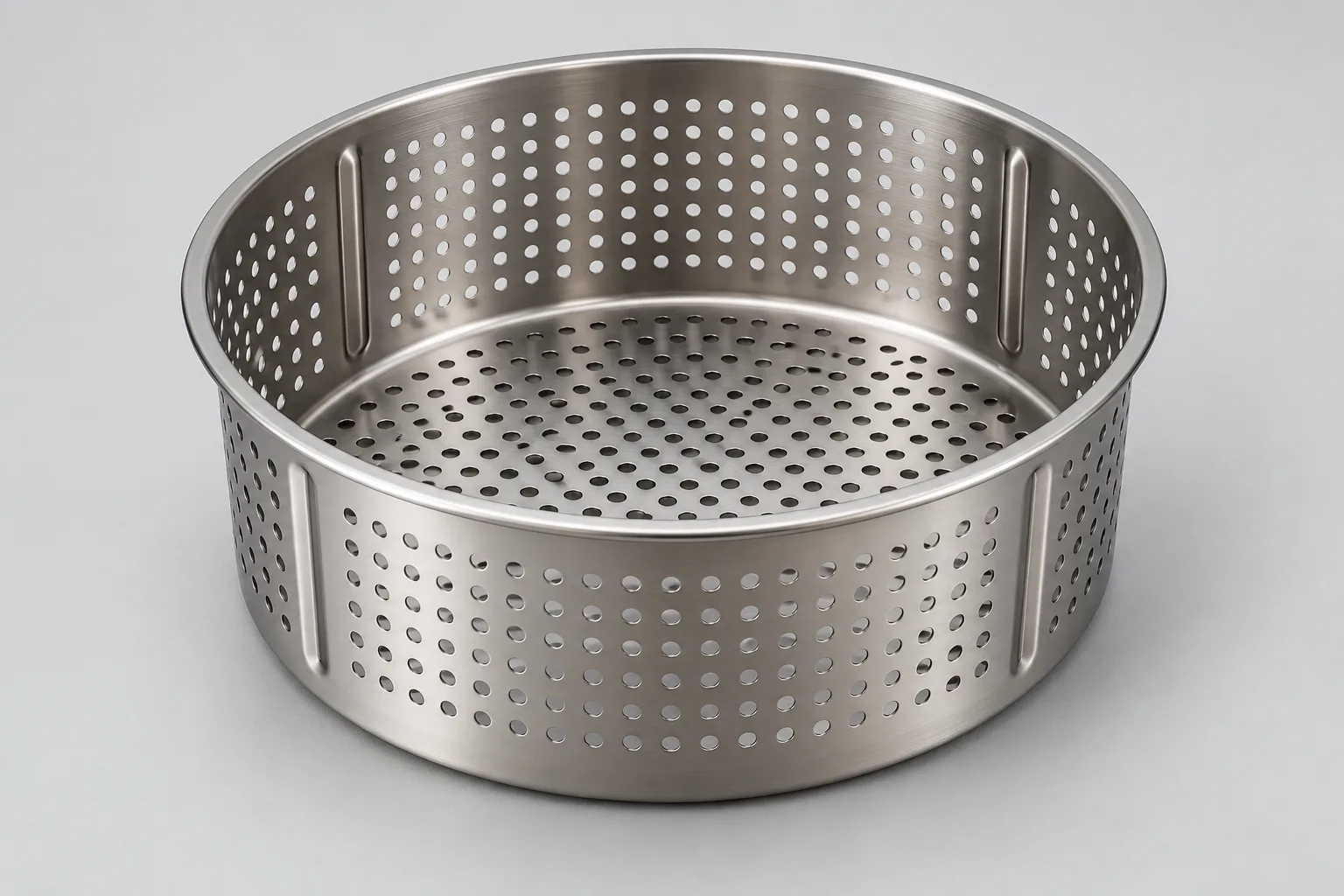
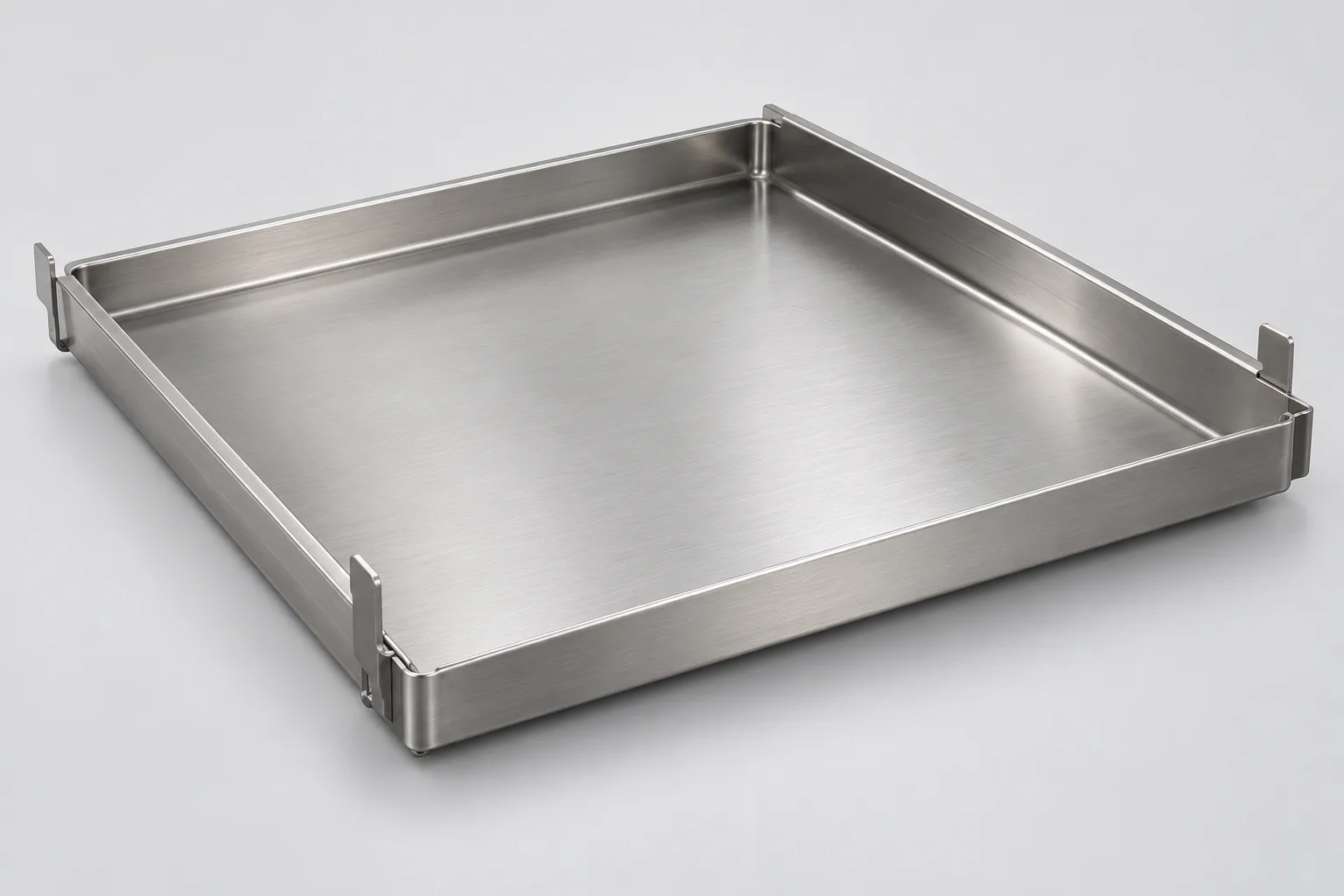
A neutral capability reference for small and medium stainless trays, pans, and drip containers with formed corners, controlled depth, flatness, and edge requirements.
- Part family — Formed stainless tray, pan, or drip container
- Core process — Drawing or forming, corner control, trimming
- Critical review — Depth, flatness, edge condition, and seating
- Supply model — Custom processing reference; no stock SKU
- Material
- SUS201 / SUS304 reference; final grade by project
- Volume & MOQ
- MOQs are program-specific — share annual volume tiers for cavitation and landed pricing.
New geometry not previously produced?
Many OEM programs begin with new geometry. We review the drawing, material, tooling route, multi-pass forming needs, and project quality requirements before recommending a path from sampling to serial production.
Typical application
For appliance, kitchen, and food-equipment programs that need shallow or medium-depth formed trays with controlled corners and clean edges.
Quality / approval considerations
Flatness, corner transition, depth, trim edge, and appearance criteria are confirmed from the drawing, sample, and project inspection plan.
RFQ package should include:
- Engineering drawing or dimensional sample photos with critical dimensions
- Annual volume tiers and target delivery window
- Material grade, thickness, surface finish, and compliance market
- Critical mating and quality features: hub interface, weld load capacity, rim circularity, or cosmetic acceptance criteria
Custom processing reference — final geometry, material, thickness, tolerances, finish, tooling route, and production scope are confirmed from the project drawing, sample, and engineering review. This is not a stocked product or customer case.
Program overview
A neutral capability reference for small and medium stainless trays, pans, and drip containers with formed corners, controlled depth, flatness, and edge requirements.
Visual capability evidence
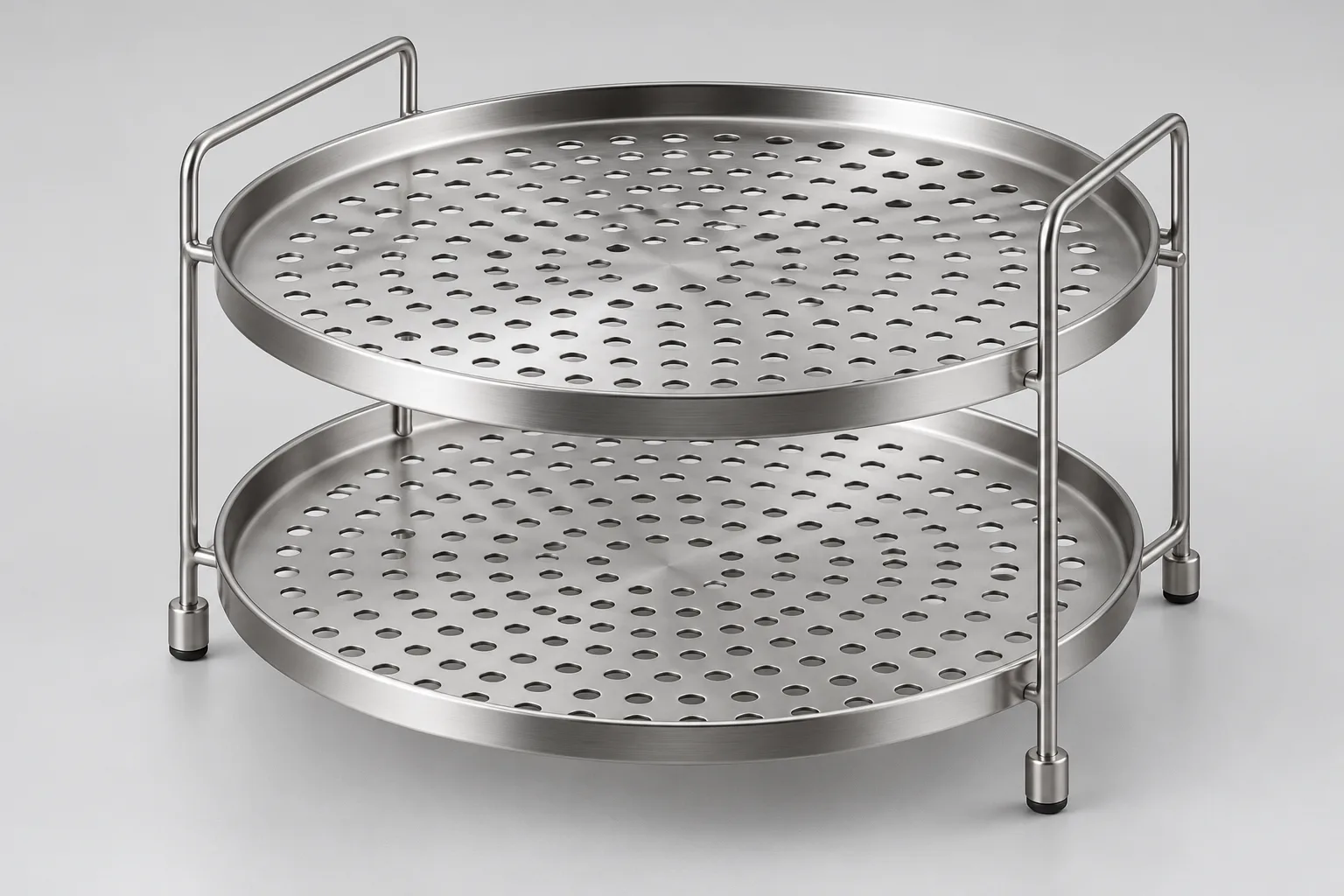
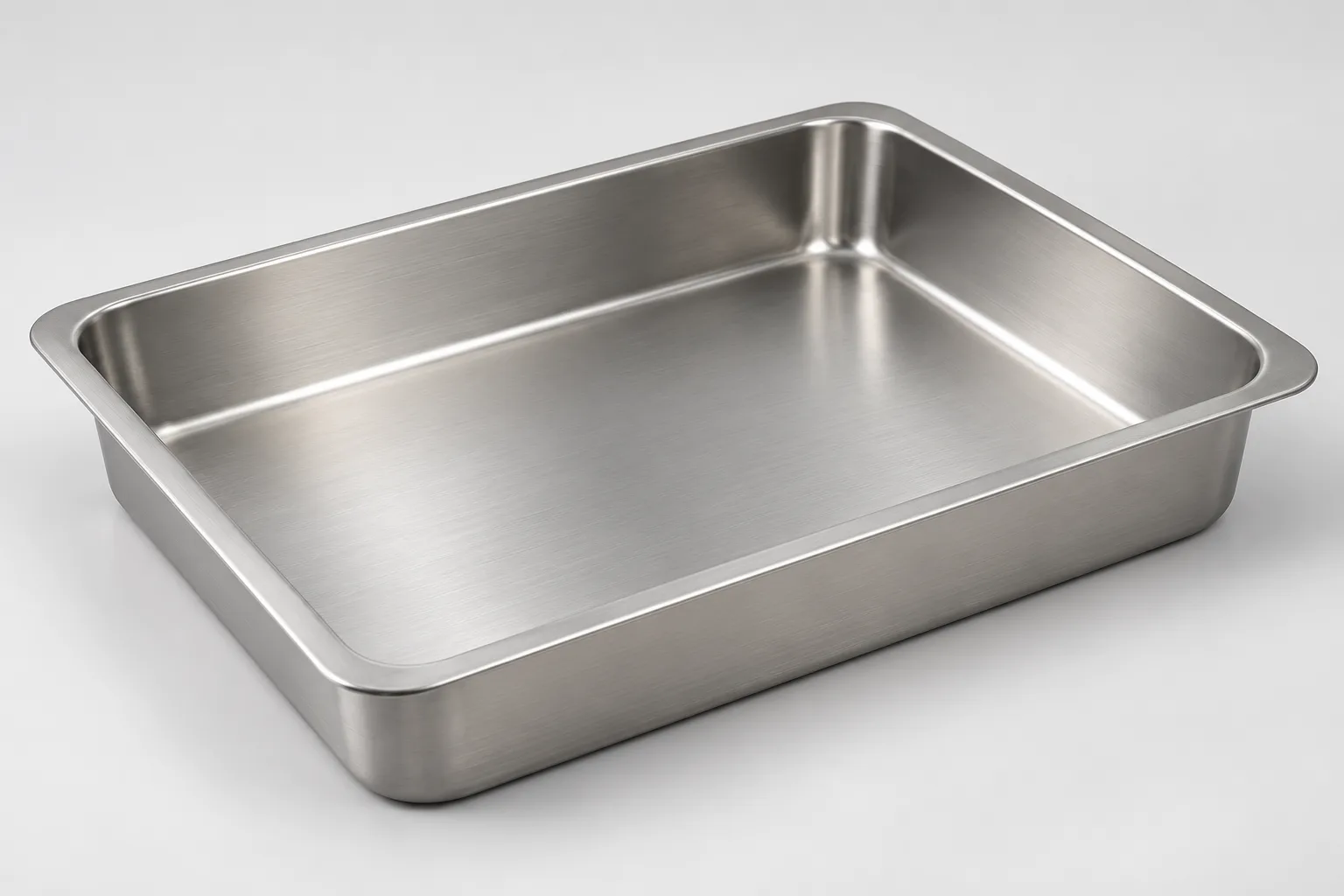
Each image is labeled by its source and purpose. Source-backed photos show comparable part or process context; illustrative renders communicate the reference shape only.









What This Reference Demonstrates
- Shallow or medium-depth forming with controlled corner transitions.
- Flatness and seating review for an assembly or support surface.
- Trim, edge, and burr control.
- Polishing, cleaning, or specified finish as required.
Typical Manufacturing Route
- 1Drawing, sample, or concept review
- 2Corner and depth feasibility review
- 3Tooling or validation route review
- 4Forming, trimming, and edge treatment
- 5Cleaning or finishing and quality gates
Specifications
| Part family | Formed stainless tray, pan, or drip container | Core process | Drawing or forming, corner control, trimming |
|---|---|---|---|
| Critical review | Depth, flatness, edge condition, and seating | Supply model | Custom processing reference; no stock SKU |
Customization from drawing
Quoted from your engineering drawing or approved reference sample — not offered as ex-stock catalog items. Typical adjustable parameters for this forming family:
| Tray outline, depth, and corner radius | Available | Flatness datum and seating surface | Available |
|---|---|---|---|
| Drain slots, holes, tabs, or flanges | Available | Material, thickness, and finish | Available |
Compliance & documentation
We support appliance and HORECA OEM programs with documented IQC–OQC quality gates, material traceability, and project-specific food-contact, RoHS, and REACH documentation coordinated per purchase order. See our Quality & compliance section for the documentation matrix.
View quality & complianceFAQ for B2B buyers
Drawing-based OEM programs — not retail or ex-stock catalog parts.
- Can you review trays with drain holes or slots?
- Yes. Hole, slot, tab, and drain features can be included in the drawing-based route review and confirmed for the selected forming and secondary process.
- How are tray flatness requirements handled?
- The project should define the datum, functional seating surface, inspection method, and acceptance limits before tooling or production release.
- Can a tray start as a validation part?
- A validation route can be reviewed when the geometry, volume, and intended transition to repeat production are clear.
Request a custom quotation
Submit your drawing-based requirements; sales engineering will return a feasibility assessment and recommended next steps. Please include:
- Engineering drawing or dimensional sample photos with critical dimensions
- Annual volume tiers and target delivery window
- Material grade, thickness, surface finish, and compliance market
- Critical mating and quality features: hub interface, weld load capacity, rim circularity, or cosmetic acceptance criteria
Similar reference programs
Same forming family — not interchangeable ex-stock items.